
Gov. Kelly delivers final State of the State address; calls on lawmakers to pass bill banning electronic devices in school districts
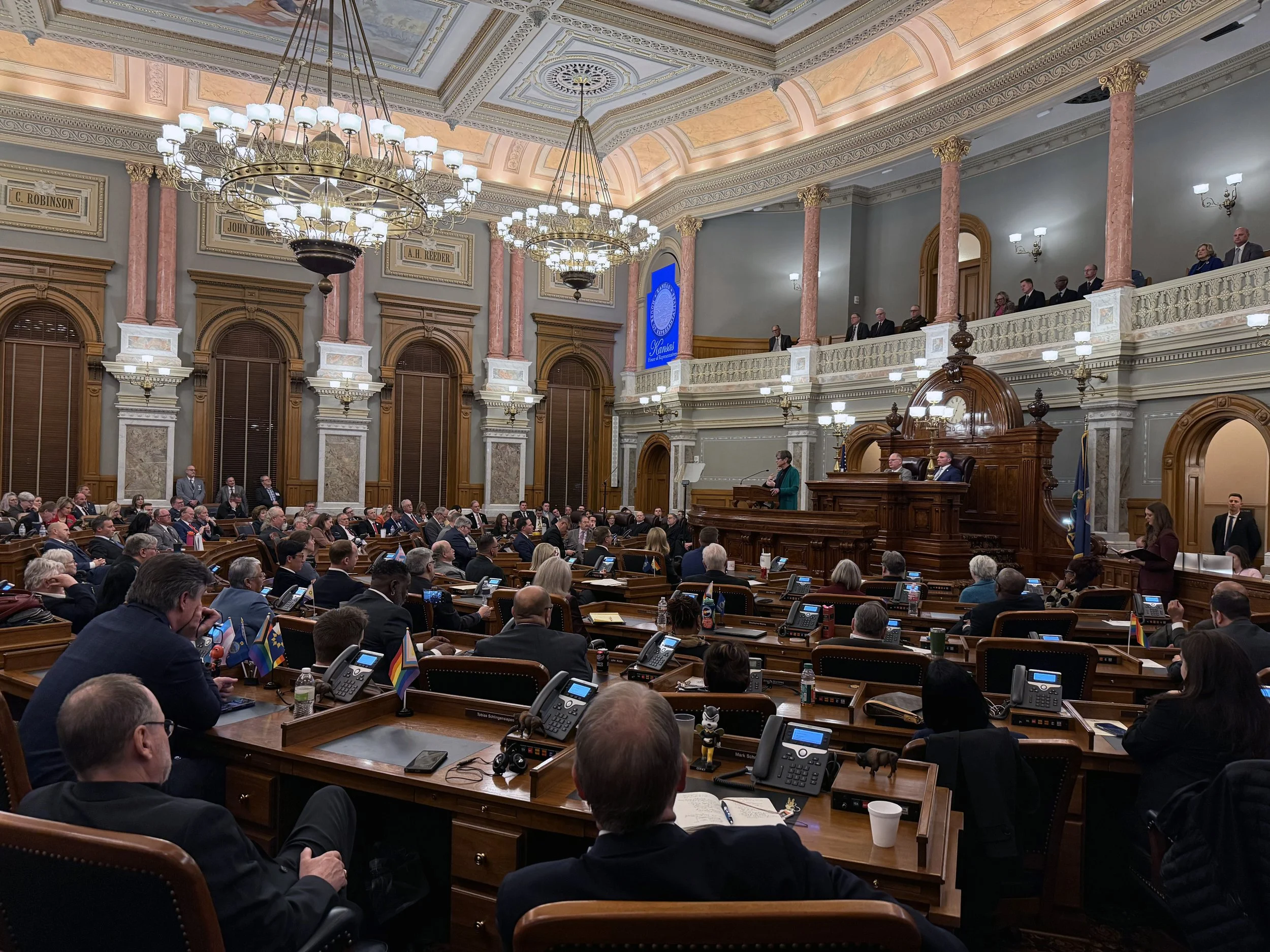
Kansas Gov. Laura Kelly gives her final State of the State address on Tuesday, Jan. 13, at the Statehouse in Topeka.
By Timothy R. Graham
KNEA Director of Government Relations
After 14 years in the Kansas Senate and eight years as the governor of Kansas, Laura Kelly delivered her final State of the State address on Tuesday, Jan. 13, setting the tone for the 2026 legislative session.
Every legislative session begins with the Governor’s State of the State address, offering an opportunity to reflect on Kansas’ progress and outline priorities for the year ahead. This year’s ceremony lasted just more than an hour, with Gov. Kelly speaking for about 38 minutes.
In her remarks, Kelly addressed a range of issues, including an agreement to bring the Kansas City Chiefs to Kansas; economic growth and fiscal stability; water challenges; investments in mental health and infrastructure; and a bipartisan proposal to ban cell phone use during the school day.
Kelly called on lawmakers to pass a bipartisan proposal banning cell phone use during the school day, framing the issue as both a learning and mental health concern.
She cited research showing rising anxiety, depression and learning disruptions among students, and argued that smartphones are making it harder for students to learn and for teachers to teach.
Two bill currently address the issue:
Senate Bill 302 prohibits the use of personal electronic communication devices during instructional time. It also prohibits school employees from using social media to directly communicate with students for official school purposes.
House Bill 2421 requires school districts to prohibit the use of personal electronic communication devices during school hours. It also prohibits school employees from using social media to directly communicate with students for official school purposes and requires school districts to report student screen time.
Urging swift legislative action, Kelly stated: “This session, we must pass the bipartisan proposal to ban cell phone use during the school day … Get that bill to my desk, and I will sign it into law.”
Read more about the bills and KNEA’s stance here.
Early in her address, Gov. Kelly spent significant time emphasizing civility and bipartisan cooperation, arguing that Kansas’ progress over the past seven years has come from leaders working across party lines and meeting in the middle.
She warned that the divisive, performative tactics seen in national politics are creeping into state government and urged lawmakers to reject that approach.
“I did not get elected governor — twice — by screaming the loudest or bullying others to get my way,” Kelly reminded lawmakers.
Education remained a central theme throughout Kelly’s address. She highlighted Kansas’ recovery from deep budget cuts and pandemic disruptions, noting that the state has fully funded general education for public schools for seven consecutive years at record levels and is working to fund special education, too. Graduation rates, she added, are at an all-time high.
Kelly credited communities, parents and policymakers. However, she made a point to single out educators.
“We all did our part — but it’s our educators who are the real heroes here,” Kelly said.
She also highlighted areas where challenges remain, pointing to the federal government’s continued failure to fully fund special education and reaffirming that Kansas has stepped in by adding more than $120 million in state funding — a commitment she said will continue in her budget, which will be unveiled Wednesday, Jan. 14, before a joint session of the House and Senate budget committees.
Kelly renewed her push to expand free school meals for Kansas students. In her address, she announced that her budget includes funding to move students who currently qualify for reduced-price lunches to fully free meals, noting that for many families — particularly in rural areas — even the reduced cost has become untenable.
“No child in Kansas should ever have to worry about having enough to eat,” Kelly said.
As the 2026 legislative session begins, Kelly’s final State of the State offered both reflection and direction. The real work now shifts to lawmakers, who will debate these priorities in the weeks ahead.
Timothy R. Graham can be reached timothy.graham@knea.org.
A UNIQUE PERSPECTIVE
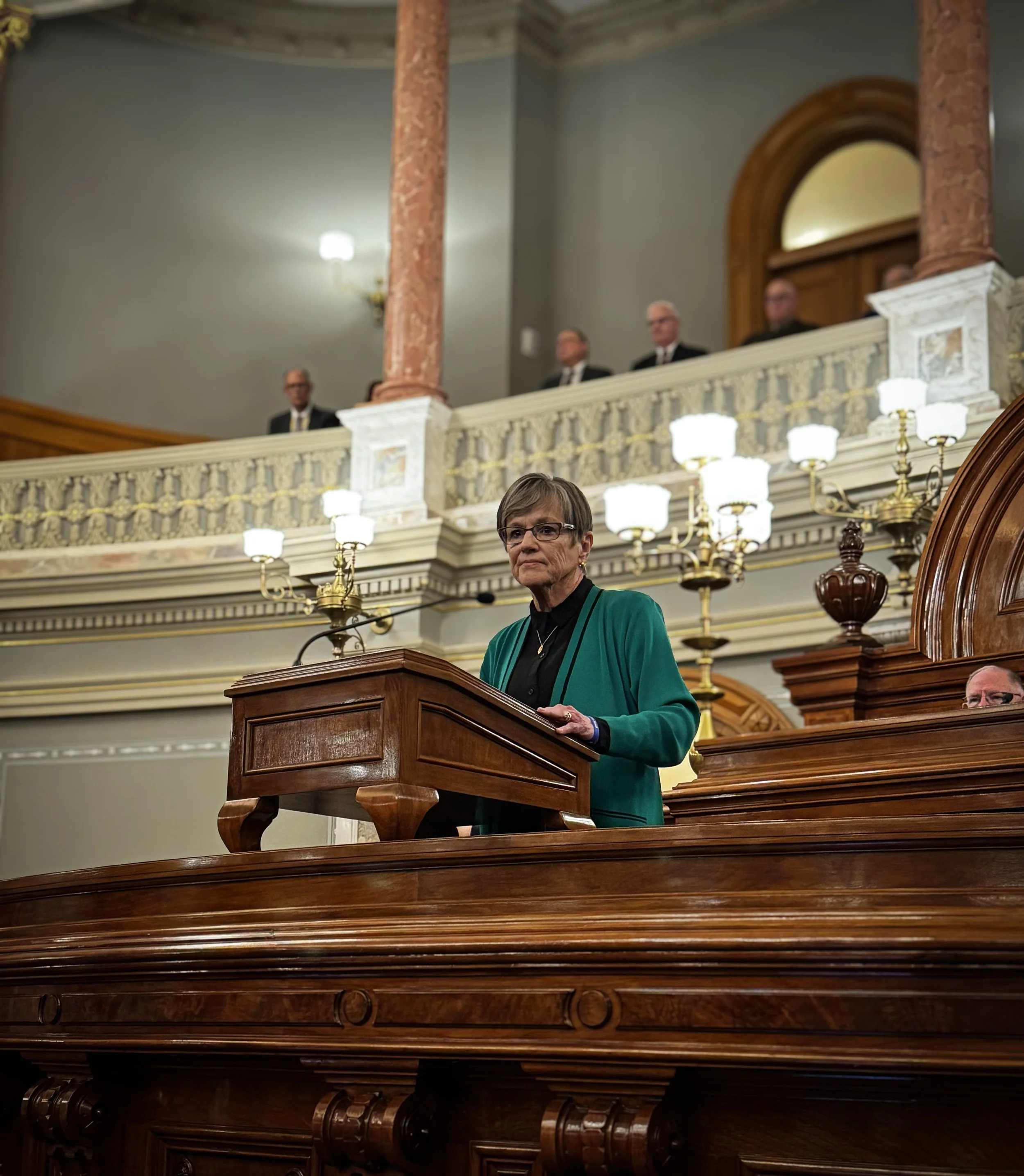
Rep. Brandon Woodard capatured this photograph of Gov. Laura Kelly on Tuesday, Jan. 13, during the governor’s final State of the State address.
KNEA REPRESENTED AT STATE OF THE STATE
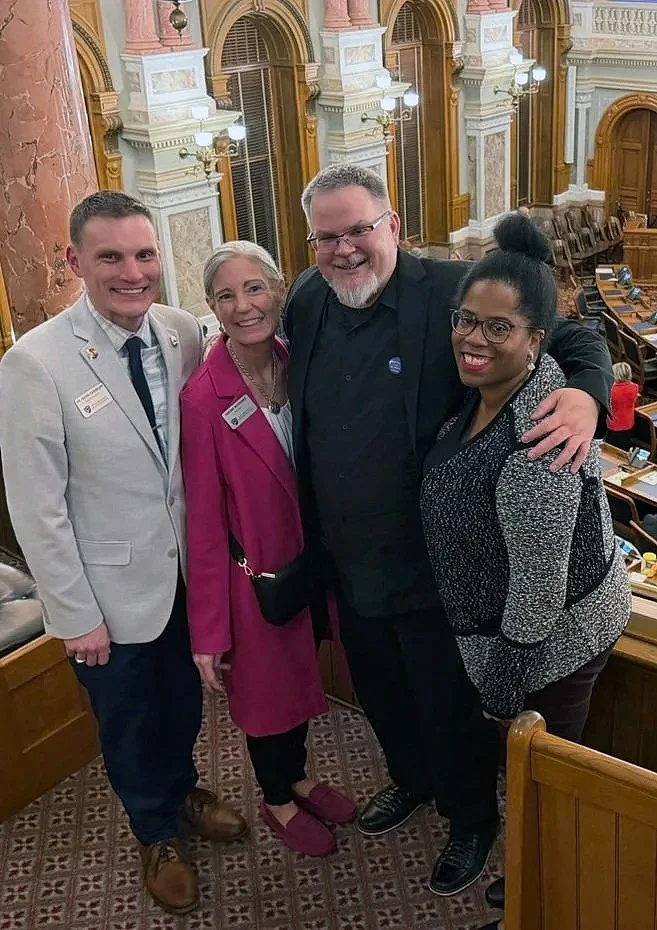
From left, Executive Director Dr. David Fernkopf, President Sherri Schwanz, NEA-Topeka President Gary Livingston, and Staff Attorney LeTiffany Obozele attended the State of the State ceremony on Tuesday, Jan. 13.