
Week 4 Wrap-Up: A busy week with pivots
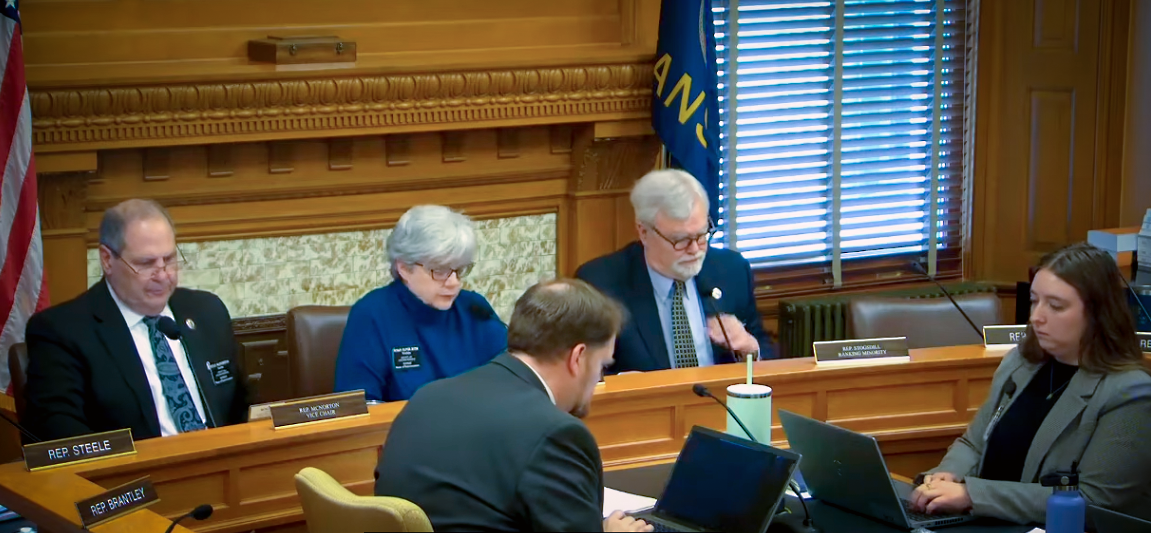
The House Committee on Education had a hearing on House Bill 2428.
By Timothy R. Graham,
Director of Government Relations
Week four of the Kansas Legislative Session was busy, fluid, and at times unpredictable — a good snapshot of how quickly the legislative process can shift.
Going into the week, the Kansas National Education Association (KNEA) planned to testify on several bills impacting educators, students, and public education. As the week unfolded, conversations with members and late changes to committee schedules required KNEA to adjust its approach and focus its advocacy.
Changes to the game plan
After additional discussions with members, KNEA made the decision not to testify on Senate Bill 419 and instead concentrate its time and energy on other legislation moving through committees. That decision reflects KNEA’s member-driven approach and its commitment to using limited time and resources strategically.
A late addition: House cell phone bill
Late Wednesday night, KNEA learned that House Bill 2421, the House version of the cell phone bill, was scheduled for a Friday hearing in the House Committee on Education. In response, KNEA testified in opposition.
KNEA previously testified neutral with concerns on the Senate version of this policy. The House bill, however, includes an additional provision that moved KNEA to opposition.
HB 2421 requires districts and accredited nonpublic schools to collect, report and publicly publish data on the average amount of screen time experienced by students in kindergarten through fourth grade during a typical school day, including time spent on school-issued instructional devices.
The bill further requires the Kansas State Department of Education (KSDE) to publish this information on its website. KNEA thinks this provision goes too far. It reduces complex instructional decisions to a single metric, invites public misinterpretation of classroom practice, and places additional reporting burdens on schools without context, resources, or demonstrated educational benefit.
For that reason, this reporting and publication requirement is the basis for KNEA’s opposition to HB 2421.
Other bills addressed this week
In addition to the cell phone bill, KNEA testified on several other measures during the fourth week:
House Bill 2428
House Committee on Education – Oppose (in-person testimony)
HB 2428 would require the Kansas Board of Regents to establish curricula and designate courses at postsecondary institutions related to diversity, equity and inclusion (DEI) and critical race theory (CRT). The bill also mandates the study of American institutions and requires certain free-speech programming during freshman orientation. KNEA opposed the bill based on concerns about legislative overreach into higher education curriculum and governance.
House Bill 2489
House Committee on Education – Neutral with concerns (in-person testimony)
HB 2489 requires school districts to implement fentanyl abuse education for students in grades nine through 12 and mandates that all schools maintain a supply of naloxone. The bill directs the Kansas State Board of Education to develop age-appropriate guidance and allows grant funding from the Kansas Fights Addiction Fund to support naloxone purchases. KNEA testified neutral with concerns, particularly around liability and implementation responsibilities placed on school districts.
House Bill 2411
House Committee on Financial Institutions and Pensions – Support (in-person testimony)
HB 2411 reduces the waiting period for KPERS retirees hired by school districts into positions requiring a teaching license or certificate. The bill creates a limited exception reducing the waiting period to 45 days, provided there is no prearranged employment agreement. KNEA supported the bill as a practical step to help address staffing needs while maintaining existing safeguards.
Senate Bill 421
Senate Committee on Education – Oppose (in-person testimony)
SB 421 enacts the Kansas Safeguarding Personal Expression at K-12 Schools (SPEAKS) Act. The bill restricts how schools may address student expression related to political, ideological or religious viewpoints and creates new legal standards for classroom work and grading. KNEA opposed the measure because of concerns about classroom management, instructional integrity, and increased legal exposure for schools and educators.
Advocacy beyond the hearing room
In addition to committee testimony, KNEA hosted another Welcome Table at the Statehouse this week, continuing its efforts to build relationships and ensure educator voices are present beyond formal hearings.
Looking ahead
Week four reinforced how quickly priorities can shift during the legislative session. KNEA remained focused, adaptable, and guided by member input — and that approach will continue as the work moves forward.
KNEA will remain engaged at the Statehouse and keep members informed as the session moves forward. Stay updated at www.ksutd.org.
Timothy R. Graham can be reached by email at timothy.graham@knea.org.