
Graham’s Grumblings: Wins, warnings, and what the hell?
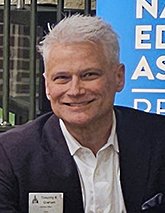
By Timothy R. Graham
KNEA Director of Government Relations
I’ll admit it - I had a lot of fun writing last week’s Graham’s Grumblings. The Good, The Bad, and The Ugly just worked. After 26 sessions inside this building, it’s not hard to sort the week into those categories.
And judging by the response, some of you enjoyed it, too.
But if you thought I was grumbly last week, you haven’t seen anything yet.
Because this week didn’t fit neatly into a Western movie theme. This week felt more like Wins, Warnings, and What the hell?
Let’s start with the win
This week, members of the Special Education Task Force came to the Statehouse. Some of them drove more than 600 miles round trip to be here.
They didn’t come for a photo op. They didn’t come armed with hashtags or political buzzwords. They came to sit across the desk from legislators and talk about real policy - special education funding, classroom realities, and what it actually takes to support students and educators.
The conversations were thoughtful. They were specific. They were grounded in lived experience. And here’s something important: Legislators appreciate that approach. When educators show up prepared, calm and focused on policy instead of politics, it cuts through the noise.
Their advocacy was a win for all of us.
Now, the warning
Legislators are telling us they are receiving hundreds - in some cases thousands - of emails on various pieces of legislation. Many of those emails look automated or just copied and pasted. Some are reportedly coming from out of state.
When everything starts to look the same, it becomes easier to dismiss all of it as noise. And that means real Kansans can get lost in the shuffle.
When we ask you to contact your legislator - or a legislator who represents a neighboring community - your voice needs to stand out as authentic and local. Keep your message brief. Be direct. But personalize it. Add your community after your signature line. Even better, identify your community in the subject line.
For example: “Lawrence, Kansas, citizen asking you to vote no on SB 123.”
That simple step signals that you are real, local and paying attention. I’m not saying your voice doesn’t matter. I’m saying that right now, how you deliver it matters more than ever.
And finally, What the hell?
Senate Bill 381 would mandate instruction on Communism and Socialism in Kansas classrooms and require every student to take and pass a citizenship-style test in order to graduate from a Kansas high school.
I’m sure you’re already thinking: What the hell?
But wait. It gets better.
The hearing leaned heavily on research from an out-of-state think tank - research offered up by a conferee who has likely never stepped foot in Kansas, let alone a Kansas classroom. Yet there he was, testifying broadly about what is supposedly happening inside our schools.
One well-known advocacy group essentially accused KNEA of greenlighting an environment that has led to a proliferation of pro-socialist and pro-communist views in Kansas public schools.
Let that sink in.
KNEA - and by extension, Kansas educators - accused of fostering communism.
Wow. Doesn’t that sound familiar?
At one point, I found myself thinking maybe the bill should require conferees to pass a history test on McCarthyism before they testify.
And the rhetoric didn’t stop there. A frequent-flyer conferee on other controversial issues claimed Kansas public schools are “teaching racism … but against a new color - whiteness.”
Take a deep breath. Literally. My Apple Watch started going bananas during that hearing because my heart rate was on the rise.
My grandmother - a wise product of Kansas public schools - used to tell me that when people say things like that, you should “consider the source” and move on.
For years, that’s exactly what many of us have done. We’ve watched fiery testimony roll through this building on bills that were never serious attempts at changing the law. They were designed to give some of the more zany voices an opportunity to be heard before the proposal quietly dies on a dusty shelf in the Statehouse basement.
So, I took a deep breath. I moved on.
But the peace didn’t last long.
Because when rhetoric like that starts getting repeated by people with actual voting power, it stops being background noise.
What makes this moment different is that two highly educated, duly elected members of the committee echoed that rhetoric. One went so far as to say that a “rise of anti-Americanism is fomented and breeding in our K–12 institutions.”
That’s not just random testimony from the gallery. That’s an elected Kansas Senator describing our public schools.
Considering the source may still be appropriate. The senator who made that comment admitted it has been a while since he’s been inside a Kansas classroom. So, maybe we need to take that as an opportunity - an opportunity to get to know him and for him to get to know us, so he can see who Kansas educators actually are.
But what is most disappointing is the sponsor of the bill - a lifelong educator who has spent years inside the public education system. How does his view of Kansas public schools and our view of Kansas public schools seem so vastly different?
Listening to the justification for this bill, you would think Kansas classrooms are filled with pinko-commie comrades being churned out by the system.
Really?
I’ve been around Kansas educators my entire life. I don’t see classrooms filled with radical revolutionaries. I see professionals trying to teach reading, math, history and yes - civics - under increasingly difficult conditions. These people are our neighbors, family members, friends, and fellow Kansans.
And while we are not in favor of curriculum mandates handed down from the Legislature, here’s a thought: If lawmakers are truly concerned about protecting democracy, maybe the curriculum conversation should focus on helping students recognize misinformation, authoritarian rhetoric, and the warning signs of extremism when they see them.
Wins. Warnings. And what the hell?
Timothy R. Graham is the Director of Governmental Relations and Legislative Affairs for KNEA. He has spent more than 25 years working inside Kansas politics and government, including Director of Government Affairs for Gov. Laura Kelly; Deputy Executive Director of the Kansas Lottery; Interim Executive Director of InterHab; Chief of Staff to the Kansas Senate Minority Leader; and Assistant Secretary of State for the State of Kansas. He can be reached via email at timothy.graham@knea.org.